Vaccinium macrocarpon | Standardized Botanical Extract
Standardized on: Anthocyanins · Proanthocyanidins (PACs) Content range: 1% – 50% Methods: UV · EP · BL-DMAC · β-Smith
1. Product Overview
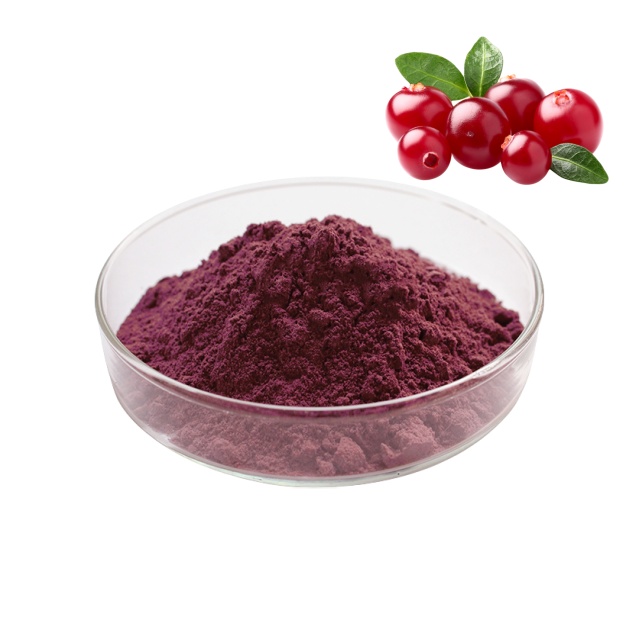
Cranberry extract powder is a botanical ingredient manufactured from the fruit of Vaccinium macrocarpon. The extract is standardized on two independent marker systems — anthocyanins, the pigments responsible for the fruit’s red-purple colour, and proanthocyanidins (PACs), the oligomeric and polymeric flavan-3-ols that are the most widely used quality marker for cranberry material in the supplement industry.
Both indexes are available across a 1% – 50% content range, so the same product line can serve a low-dose colour and flavour application or a high-potency capsule formulation. Each specification is released against a defined analytical method, and the method is stated on the certificate of analysis rather than assumed.
The material is supplied as a fine, free-flowing powder suitable for encapsulation, tableting, dry blending and beverage premix production.
2. Specification
| Parameter | Specification | Method |
| Product name | Cranberry Extract Powder | — |
| Botanical source | Vaccinium macrocarpon, fruit | — |
| Plant part used | Fruit | — |
| Active marker 1 | Anthocyanins | UV · EP |
| Active marker 2 | Proanthocyanidins (PACs) | BL-DMAC · β-Smith |
| Content range | 1% – 50% (either marker, per agreed specification) | As stated above |
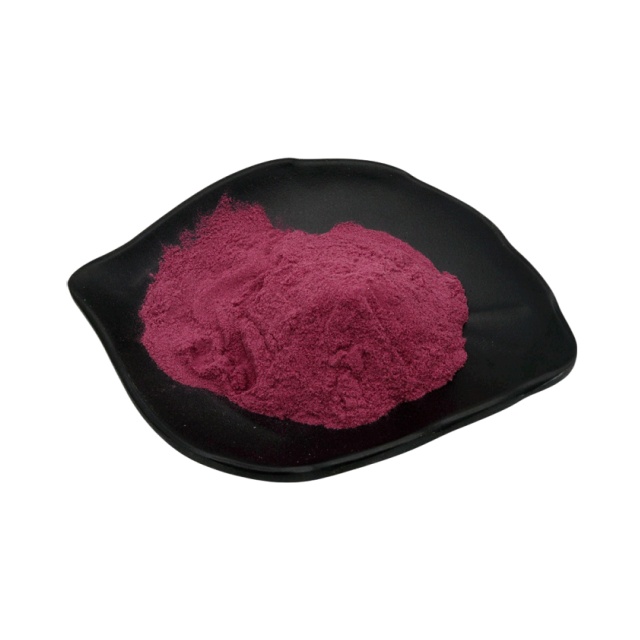
| Appearance | Fine powder, light pink to reddish-purple | Visual |
| Colour note | Depth of colour increases with anthocyanin content | — |
Custom specifications. Graded strengths inside the 1% – 50% range — for example a single-marker or dual-marker standard — are produced to order. The exact assay value, the reference standard used and the testing method are fixed in the specification sheet before production.
Parameters released per batch, not fixed in this page: moisture, ash, particle size, bulk density, heavy metals, microbiological limits, residual solvents, carrier or excipient content, country of origin, shelf life and storage conditions. These are stated on the batch certificate of analysis.
3. The Two Marker Systems
3.1 Anthocyanins
Anthocyanins are the water-soluble pigments that give cranberry its colour. As a commercial standard they are expressed as a percentage of the extract and are the marker of choice when the application depends on colour contribution as well as on a declared actives level. They are routinely determined by UV-Vis spectrophotometry, or by the European Pharmacopoeia method where a pharmacopoeial grade is required.
3.2 Proanthocyanidins (PACs)
PACs are the condensed tannins of the fruit. Cranberry is characterised by A-type proanthocyanidins — units linked partly through A-type bonds, a structural feature that distinguishes cranberry PACs from the B-type PACs typical of grape seed or pine bark. PAC content is the standard potency marker for cranberry ingredients in capsule and tablet applications, and it is measured by DMAC-based colorimetric methods.
4. Analytical Methods
| Method | What it determines | Where it is used |
| UV (UV-Vis spectrophotometry) | Total anthocyanins by absorbance | Routine release testing; fast, well-established colorimetric assay |
| EP (European Pharmacopoeia) | Anthocyanins / extract assay to pharmacopoeial procedure | Material intended for pharmacopoeial-grade or EP-referenced specifications |
| BL-DMAC | Proanthocyanidins by reaction with 4-dimethylaminocinnamaldehyde | Industry reference method for cranberry PAC content |
| β-Smith | Proanthocyanidins, DMAC-based determination | Alternative PAC assay, used as a specification method or as a cross-check against BL-DMAC |
Why the method matters. Different PAC methods can return different numbers on the same powder. Two suppliers quoting “40% PAC” are not necessarily quoting the same measurement. Every quotation and every certificate of analysis in this product line names the method alongside the value, so the figure can be compared directly with your existing specification or with a third-party result.
5. Applications
· Hard capsules and tablets — high-potency PAC specifications for single-ingredient or combination formulas
· Powder blends and sachets — free-flowing powder that disperses into dry mixes
· Functional beverages and drink mixes — anthocyanin-graded material for colour and marker content
· Gummies and confectionery — colour-bearing grades
· Food and beverage colouring — anthocyanin-rich specifications used as a botanical colour source
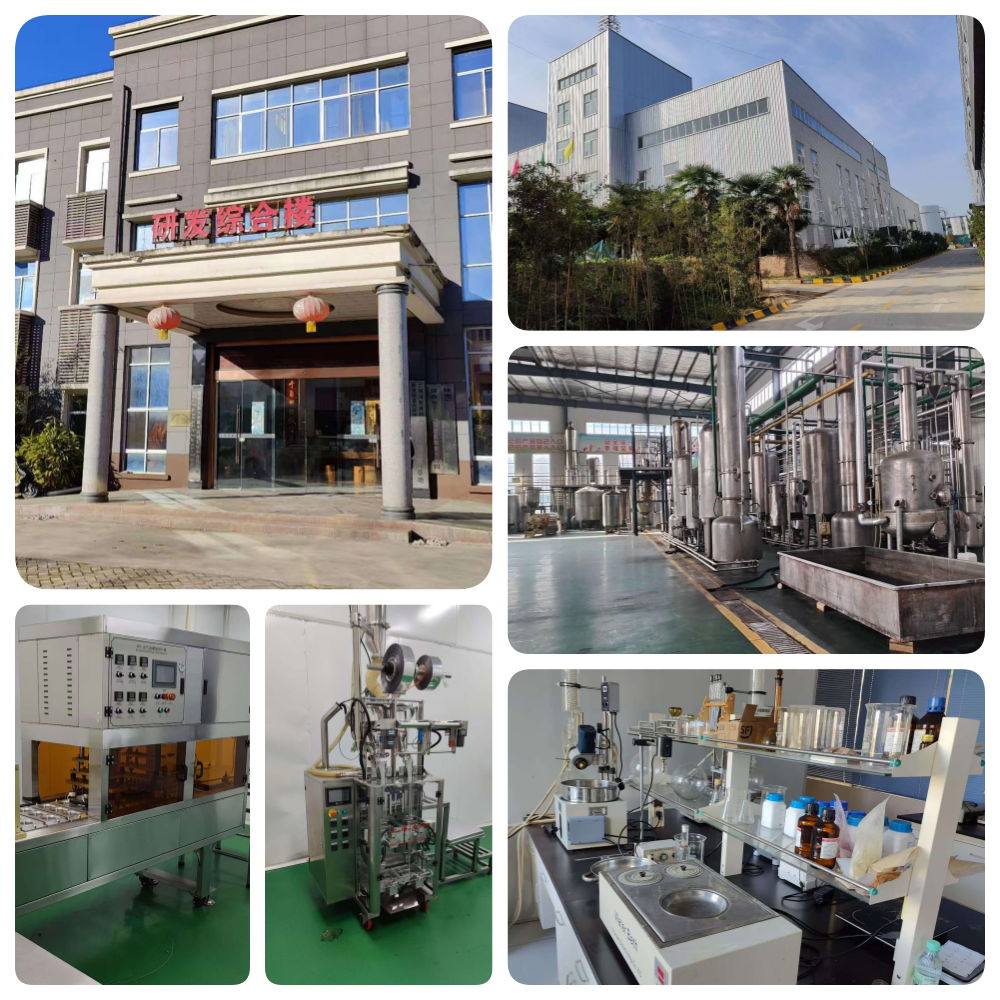
6. Quality Control
From berry to batch — five controlled steps
1. Raw material — incoming fruit and concentrate checked against the approved specification before release to production
2. Extraction — controlled extraction of the fruit material
3. Spray drying — conversion to a free-flowing powder under defined parameters
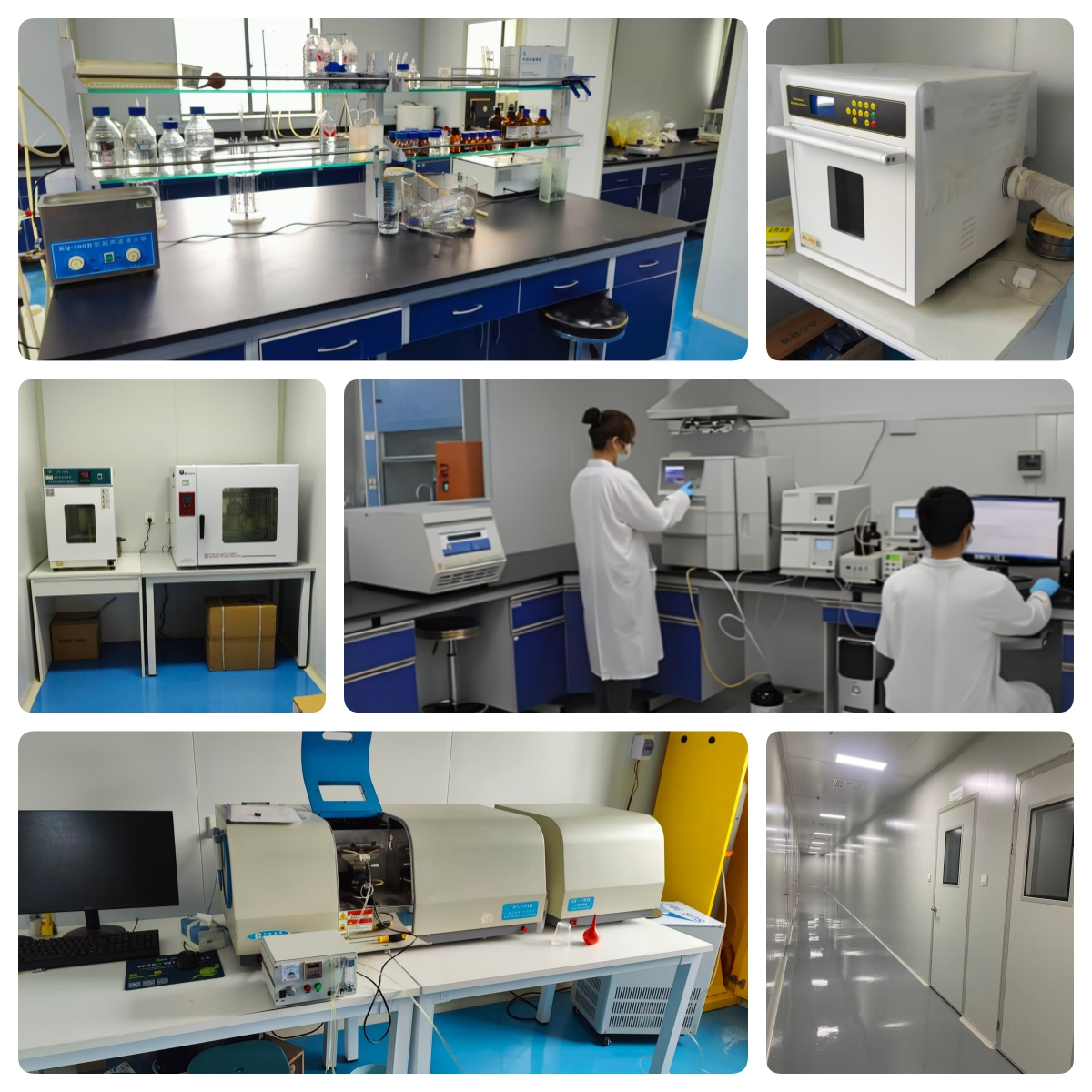
4. Laboratory testing — assay of the declared marker by the specified method, plus the safety parameters on the batch specification
5. Retained sample — a sealed retention sample held from every batch for traceability and re-test
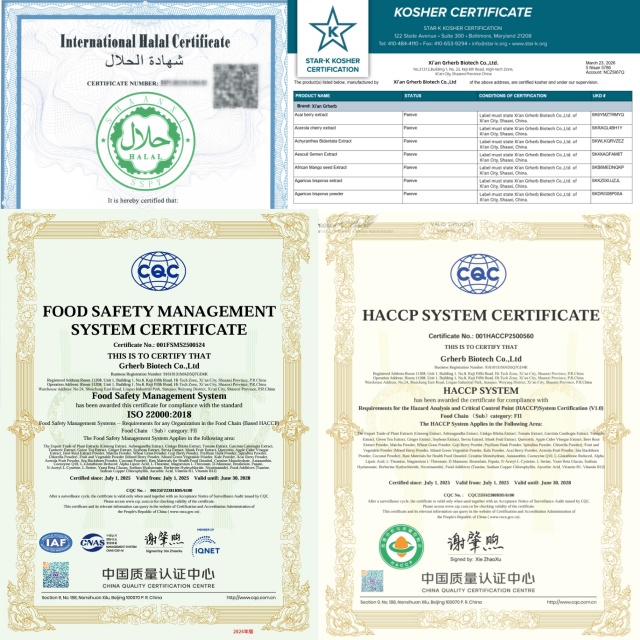
Documentation issued with each shipment: certificate of analysis for the batch, specification sheet, and safety data sheet. Third-party laboratory testing can be arranged on request, and the report is issued against the same method named in the specification.
7. Packaging and Storage
| Format | Detail |
| Bulk | 25 kg fiber drum with food-grade inner liner |
| Sample / small order | 1 kg aluminium foil bag |
| Export handling | Drums palletized and strapped for container shipment |
Store in a cool, dry place protected from light and moisture, in the unopened original packaging. Specific storage temperature and shelf life are stated on the batch certificate of analysis.