
Basic Information
- Alternative Names: Turmeric yellow, Acid yellow
- Molecular Formula: C21H20O6
- Molecular Weight: 368.38
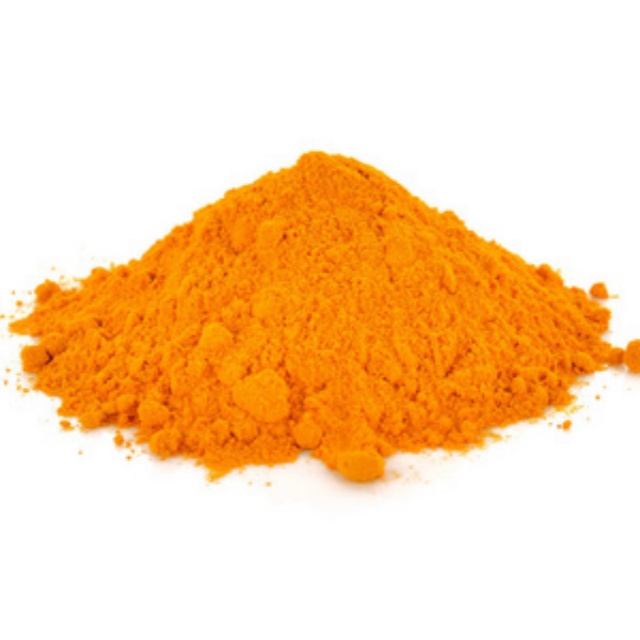
- Physical State: An orange-yellow crystalline powder with a special odor, slightly bitter taste, and non-toxic.
- Solubility: Insoluble in water and ether, soluble in ethanol, acetone, glacial acetic acid, and propylene glycol, slightly soluble in ether with a faint green fluorescence. It appears reddish-brown under alkaline conditions and pale yellow under acidic conditions. It turns yellow-red when dissolved in concentrated sulfuric acid and changes color when forming chelates with metal ions.
Main Components
The main effective component in turmeric is total curcuminoids, which include curcumin, demethoxycurcumin, and bisdemethoxycurcumin. The proportions of these three components in turmeric raw materials may vary due to differences in varieties, origins, and climates, approximately in the ratio of 3:1:1.7.
Extraction and Refinement
Methods for extracting curcumin include alcohol extraction, acid-base extraction, and enzymatic extraction; methods for refining include polyamide adsorption, acetic acid precipitation, and recrystallization.
Effects and Functions
Curcumin possesses multiple biological activities, including anti-tumor, antioxidant, antibacterial, liver-protecting, and hypolipidemic effects. The specific mechanisms of action are as follows:
Antioxidant Effect: Curcumin inhibits lipid peroxidation, cellular oxidation, modifies low-density lipoprotein, and protects DNA from damage caused by peroxidized lipids. The chemical structure of curcumin contains two phenylpropenoyl skeletons like cinnamaldehyde, with a hydroxyl group and a methoxy group on each of the two tea rings, and a β-diketone structure between the two phenyl rings. Therefore, curcumin is a unique antioxidant containing many functional groups. Curcumin exerts its antioxidant effect by increasing the activity of superoxide dismutase (SOD) and glutathione peroxidase (GSH-Px) in cells, inhibiting the production of reactive oxygen species, and scavenging free radicals and peroxides.
Anti-inflammatory Effect: Curcumin has anti-inflammatory effects on acute, subacute, and chronic inflammation. Curcumin can reduce the infiltration of neutrophils, inhibit lipid peroxidation, and decrease the activity of serine to inhibit the inflammatory response of colonic cells. Curcumin downregulates the levels of inflammatory cytokines, resistin, and leptin in healthy individuals, obese individuals, and diabetics, while upregulating the levels of adiponectin and related proteins. Curcumin can inhibit the survival of synovial fibroblasts in the joint fluid of rheumatoid arthritis patients and induce their apoptosis, downregulating the expression of XIAP in synovial fibroblasts, thereby regulating the expression of the Bcl-2 and IAP families. Curcumin can alleviate the clinical symptoms of patients with inflammatory bowel disease (IBD) and arthritis.
Anti-tumor Effect: Curcumin inhibits the growth of multiple tumor cells in vitro. Curcumin can inhibit skin cancer induced by dimethylbenzanthracene or 12-O-tetradecanoylphorbol-13-acetate (TPA) in animals, reducing the levels of various biomarkers related to oxidative damage, inflammation, and tumors. The inhibitory effect of curcumin on tumor cell growth may be achieved through inducing apoptosis, blocking signal transduction pathways in tumor cells, inhibiting tumor cell growth and metastasis, inhibiting tumor angiogenesis, and inhibiting hepatocyte cytochrome P450 enzyme systems.
Application Fields
Curcumin is widely used in the medical, food, aquaculture (feed), and daily chemical products industries. In the food industry, curcumin serves as a coloring agent in cakes, candies, beverages, ice cream, colored beverages, and other foods.
Precautions
- Excessive intake of curcumin may adversely affect the body, so it is advisable to follow the advice of a professional doctor when using it.
- Pregnant women, lactating women, and children should consult a professional doctor or pharmacist before use.
- Curcumin may interact with certain medications, so it is important to be aware of the risk of drug interactions when using it.
In summary, curcumin is a natural compound with multiple biological activities and has broad application prospects in the medical and food industries. However, further research is needed on its long-term safety and specific mechanisms of action. When using curcumin, it is advisable to follow the advice of a professional doctor and be aware of the risk of drug interactions.
Coa

